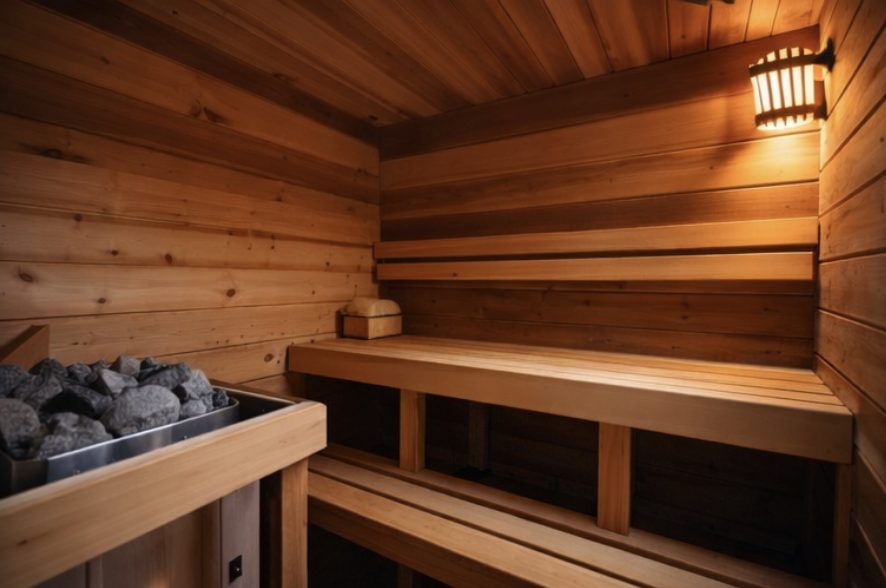
A sauna is more than a heater and four walls. The wood that surrounds you plays a huge role in comfort, durability, and the atmosphere of the space. Among all the options available, Western Red Cedar has become the preferred choice for many high-quality saunas.
Below, we break down what makes cedar such a strong performer in the demanding environment of a sauna and why we use it so often in our projects.
1. Cedar Handles Heat and Humidity Exceptionally Well
Saunas expose wood to cycles of high heat and humidity. Poorly suited materials can warp, crack, or grow mold over time. Western Red Cedar contains natural compounds that help it resist moisture and decay, even in challenging environments.
When properly installed and maintained, cedar cladding and benches can last for many years without losing their structural integrity or visual appeal.
2. Cedar Stays Comfortable to the Touch
No one wants to sit on a bench that feels scorching hot. Cedar has a lower density than many hardwoods, which means it does not absorb and hold heat as aggressively. In practical terms, that means:
- Benches are more comfortable to sit or lie on, even at higher temperatures.
- Backrests and headrests feel pleasant rather than harsh.
- The risk of surface discomfort is reduced compared with some denser species.
3. The Aroma and Atmosphere
One of the first things people notice when they step into a cedar sauna is the gentle, natural aroma. It is subtle rather than overpowering and contributes to the sense of warmth and calm that many people seek from their sauna sessions.
This is difficult to replicate with synthetic materials or generic softwoods and is a big reason cedar is associated with a “spa-like” feel.
4. Visual Warmth and Character
Cedar’s natural color variations and grain patterns add visual interest to the space. Whether you prefer a more uniform look or like the character of knots and colour shifts, cedar offers a lot of flexibility in design.
With thoughtful lighting, cedar can make even a compact sauna feel inviting and refined.
5. Cedar Compared With Other Common Sauna Woods
| Feature | Western Red Cedar | Hemlock | Spruce / Pine |
|---|---|---|---|
| Moisture resistance | Excellent | Moderate | Lower |
| Comfort at high temperatures | Excellent | Good | Fair |
| Natural aroma | Warm, pleasant | Minimal | Resinous / knotty |
| Visual character | Rich colour and grain | Neutral, uniform | Variable |
6. Sustainability and Sourcing
Western Red Cedar is widely used in construction and outdoor applications. When sourced from responsible suppliers, it can be part of a more sustainable building approach than many synthetic alternatives. It is also easy to work with using standard woodworking tools, which helps keep installation efficient and precise.
7. Where Cedar Works Best in a Sauna
Cedar is commonly used for:
- Interior wall and ceiling cladding
- Benches and backrests
- Trim, door frames, and accessories
Some designs also use cedar externally, though exterior elements may be finished differently to handle sun and weather exposure.
8. Designing Your Sauna With Cedar
When you are planning a sauna, it helps to think about the layout, heater choice, bench heights, and the overall feel of the space all at once. Cedar gives you a forgiving, beautiful material to work with, making it easier to achieve the atmosphere you want.
If you would like to explore layouts and options, these resources can help:
- How to Sauna: A Simple Guide for Beginners
- The Benefits of Saunas and Hot–Cold Therapy
- Overview of our design and build approach
Thinking About a Cedar Sauna for Your Home?
Western Red Cedar combines performance, comfort, and aesthetics in a way that few materials can match. Whether you are considering a compact backyard barrel sauna or a larger custom build, choosing the right wood is a big part of getting long-term value from your investment.
Get in touch for a free estimate and we will help you plan a cedar sauna that fits your space and routine.